The 10 Commandments of the Intrapreneur
In the guide The intrapreneur
In short: An intrapreneur is an employee who builds something new inside a company, instead of leaving it to become an entrepreneur. Gifford and Elizabeth Pinchot coined the word in a 1978 paper. In his 1985 book Intrapreneuring, Gifford Pinchot set out 10 commandments, from “Come to work each day willing to be fired” to “Honor your sponsors”.
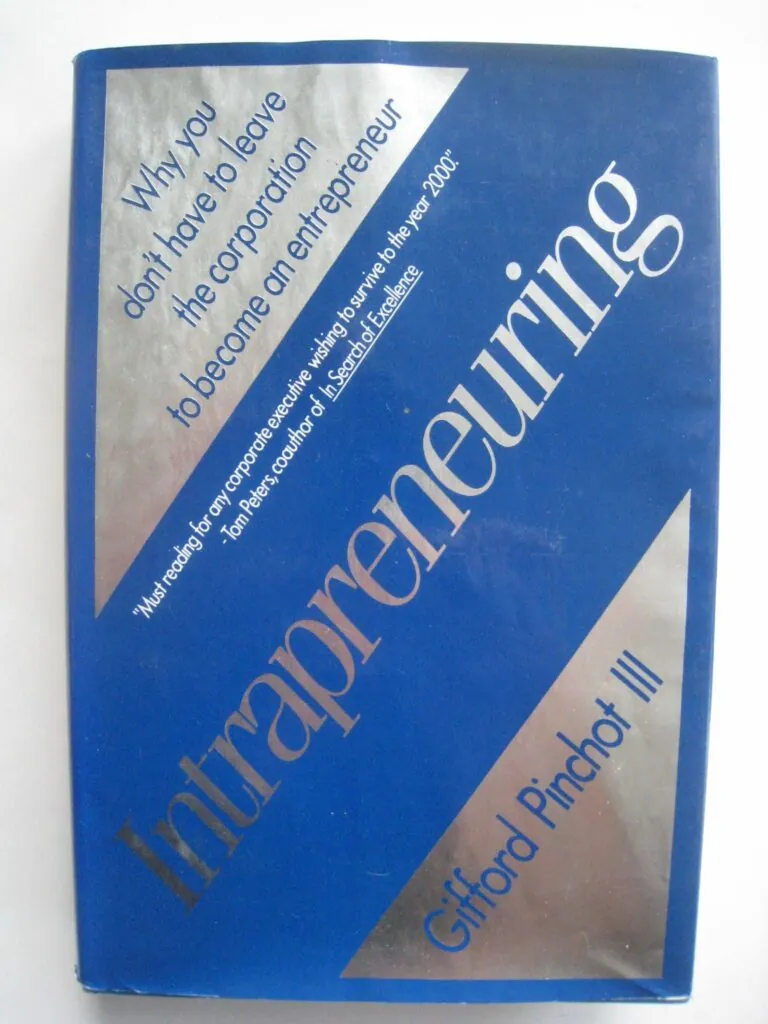
In 1985, the book Intrapreneuring by Gifford Pinchot answers the question in its subtitle: Why You Don’t Have to Leave the Corporation to Become an Entrepreneur.
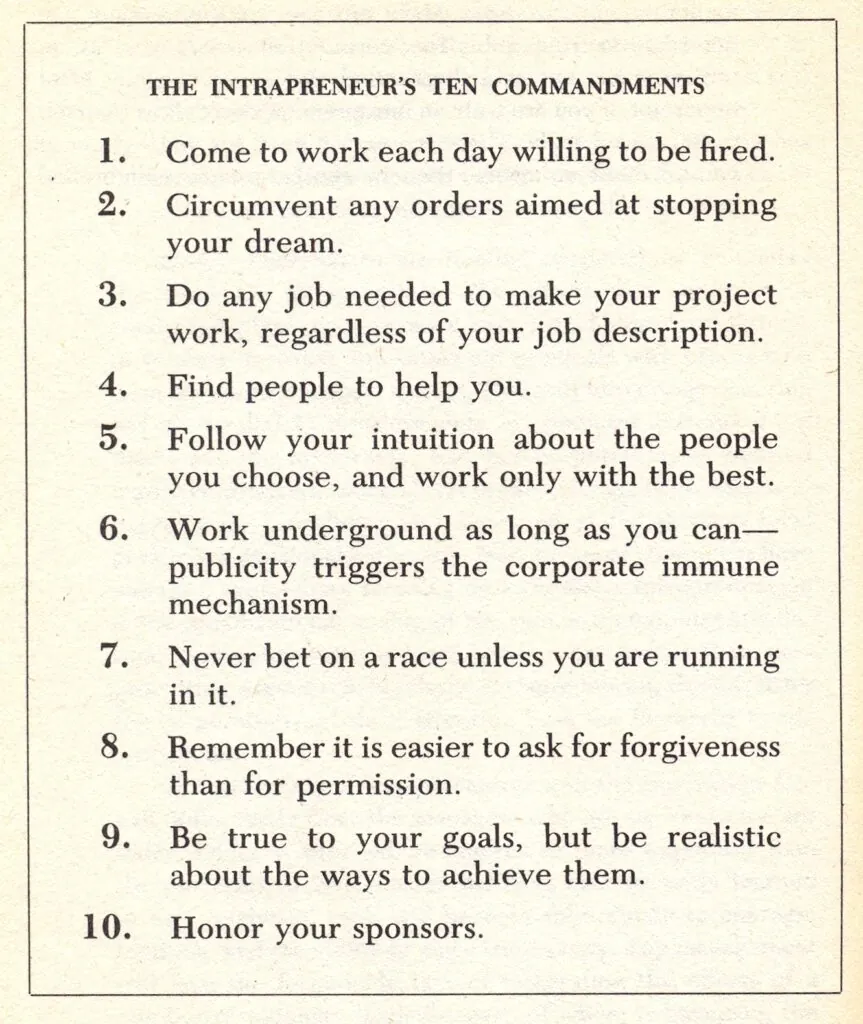
As part of the answer, he proposes “The Intrapreneur’s 10 Commandments”.
37 years later, intrapreneurship has grown considerably and those 10 commandments are still relevant.
What are the 10 commandments of the intrapreneur?
- Come to work each day willing to be fired
- Circumvent any orders aimed at stopping your dream
- Do any job needed to make your project work, regardless of your job description
- Find people to help you
- Follow your intuition about the people you choose, and work only with the best
- Work underground as long as you can – publicity triggers the corporate immune mechanism
- Never bet on a race unless you are running in it
- Remember it is easier to ask forgiveness than to ask permission
- Be true to your goals, but realistic about the ways to achieve them
- Honor your sponsors
When designing and operating intrapreneurship programs at Tango, we found that some of those commandments are in fact pillars of our programs.
How do the commandments work in practice?
Added on September 29, 2026. Most of these commandments come back in my other notes.
- 1. Willing to be fired. In most companies, “costly mistakes end careers”, and “the best innovators are the worst employees”.
- 2. Circumvent orders. When sales teams block customer tests, I advise a parallel discovery track: the goal “isn’t to circumvent sales, but to collaborate”.
- 3. Do any job needed. At Nissan, John Ferguson, a technical architect, found an e-ink supplier for his prototype and interviewed car buyers on London streets (a project we coached at Tango).
- 4. Find people to help you. For Make It by Leroy Merlin (in French), Matthieu Degeorges brought on board suppliers, stores and sales advisers from all over France.
- 5. Choose your people. An innovation director’s most important decision is not what project to fund, “but who they choose to build it”.
- 6. The corporate immune mechanism. “Corporate antibodies seek and destroy innovative projects” once a working pilot is ready to scale. Don’t fight them: “listen to what they’re protecting”. At Total (in French), a sales director said: “We have a problem and its name is FioulMarket.”
- 8. Forgiveness, not permission. I shared Thomas Wedell-Wedellsborg’s case for corporate disobedience: you can’t really innovate without bending the rules. A staged hackathon gives engineers “political cover to prototype forbidden ideas”.
- 9. Goals and means. A pivot (in French) is “a change of strategy without a change of vision”. As Jeff Bezos puts it, be “stubborn on your vision” but “very flexible on the details”.
- 10. Honor your sponsors. Sponsors matter as much as the people with the idea. At SNCF Réseau (in French), Jean-Jacques Thomas rallied support and investment for the drone startup Altamétris, then proposed making it a subsidiary.
To go further, the guide The intrapreneur gathers my notes on intrapreneurs: what stands in their way, the sponsors who back them and the leaders who let them work.
Added on October 6, 2026.
FAQ
What is an intrapreneur?
An employee who builds something new inside a company rather than leaving it to start one. The subtitle of Gifford Pinchot’s 1985 book sums it up: Why You Don’t Have to Leave the Corporation to Become an Entrepreneur. It takes a dream, people to help you and sponsors to back you.
Who wrote the intrapreneur’s 10 commandments?
Gifford Pinchot, in his 1985 book Intrapreneuring. The commandments are part of his answer to the question in the subtitle. Decades later, they are still relevant: when we designed and ran intrapreneurship programs at Tango, some of them turned out to be pillars of our programs.
What does “work underground” mean for an intrapreneur?
Commandment 6 says to work underground as long as you can, because publicity triggers the corporate immune mechanism. Corporate antibodies seek and destroy innovative projects once a working pilot is ready to scale. My advice: don’t fight them, listen to what they’re protecting.
Why should an intrapreneur honor their sponsors?
Sponsors matter as much as the people with the idea. They bring support and investment. At SNCF Réseau, Jean-Jacques Thomas rallied support and investment for the drone startup Altamétris, then proposed making it a subsidiary.