Author: Franck

  • Moving from Software Development to Product Management

    Moving from Software Development to Product Management

    Moving from software development to product management is a leap that many developers consider. This move opens doors to new challenges and responsibilities while allowing to have broader impact on outcomes. It one of the transition I made I my life. Here’s why such a shift can be rewarding, the best approach to make this transition, and how to excel once you’re there.

    Why Make the Move

    As a developer, you play a critical role in bringing designs to life, focusing primarily on coding and technical solutions. Transitioning to product management broadens your impact. You can guide the direction of a product and ensure that it meets the market’s demands. It’s about moving from “how we build it” to “what and why we build.”

    As a developer, you have deep understanding of the technical intricacies of product building. Leverage this technical knowledge to make informed decisions, foresee potential challenges, and bridge the gap between the technical team and other stakeholders.

    If you seek new ways to grow and face different challenges. Product management offers a pathway to leadership, requiring a blend of technical understanding, strategic thinking, and customer-centric decision-making.

    These are the main reasons why I want to become a product manager. As a developer and technical director, I was given product requirement documents that I didn’t agree with. However, my job was to build, not to define. So, I switched.

    How to transform into a product manager

    To get started nothing beat experience. But you will only get hired if you have experience. So build that slowly.

    1. Learn Continuously: Product management is a constant learning curve — from market trends to customer needs. Take advantage of resources like online courses and relevant books. Attend webinars and conferences to stay updated on trends and network with professionals.
    2. Gain Practical Experience: Engage in projects that allow you to take on product management roles, even informally. This could mean leading a small project, collaborating closely with the existing product management team, or proposing unpaid support to startups. This hands-on experience is invaluable.
    3. Build on Your Technical Strengths: Your technical expertise is a significant asset in this role. This allows you to understand the feasibility of projects quickly, communicate effectively with the development team.
    4. Build on Your Industry Expertise: You might not realise it, but you already know a lot of the use cases built into the software. You have been talking to product managers for a while in your industry. You know more than an outsider. Becoming a product manager in a known industry or sector make the transition easy. For me it was in the media and adtech space.
    5. Network Actively: Join active product management communities. These platforms offer learning and networking opportunities. You will gain insights into the role, and can be excellent sources for mentorship.

    Excelling in the Product Management Role

    Once you are in the shoes of a product manager, you need to excel at the job. Here are my advices:

    What not How: Shift your mindset from finding technical solutions to identifying and solving user problems. Your role involves understanding what users need and why they need it, then guiding your team to deliver these solutions effectively. Not desining tecnical solutions.

    Data-Driven Decision : Make decisions based on data rather than intuition. Analyze user feedback, market trends, and product analytics. This approach helps you prioritize features and also share your decisions with stakeholders.

    Be a Communication Bridge: With your technical background, you’re uniquely positioned to translate between the dev team and other stakeholders, ensuring all parties are aligned. This involves clear communication, empathy, and a deep understanding of each group’s perspectives.

    Adopt a Customer-Centric Approach: Your decisions should always prioritize user needs. Engage with customers and learn to perform customer discovery. You should ne the voice of the customer around the table.

    Going from software development to product management was an exciting journey.

    For me, the experience was about unlearning the habits I had acquired as a technical lead and starting to learn a new set of tools, approaches, and ways of thinking. It expanded my perspectives and taught me that I was capable of more than I thought.

    It was not an easy road, but I was willing and curious to explore. The journey has been fulfilling beyond expectations.

    Here are some to start your journey

    (if you are based in in Paris or France)

    Events to Meet and Learn:

    Companies to follow:

    To find opportunities:

    To read:

  • Creating Effective Business Presentations

    Get your ideas across by presenting them the right way

    Your ability to present ideas in a precise, articulate and convincing manner makes a huge difference to your listener. Strategy consulting firms like McKinsey, Bain or BCG have perfected this art. Here are the key takeaways I use for my presentations.

    Tell a story

    Craft your presentation like a story. The Freytag’s Pyramid is a model used in many classical stories and you can use it to build your story presentation.

    1. Situation: Clearly explain the problem and the situation faced, why this problem matters and the potential consequence of the situation is not addressed. Show the tension.
    2. Analysis: Synthesis your key finding from the research phase, the new insights that you learned from the work you did. Explain where the insight came from. Explain why those insights are surprising and valuable. Show the tension on the insights, they hint that something can done about the situation.
    3. Recommendation: In the light of the insights you just mentioned, propose your recommendations. How are your recommendations addressing this situation? Propose what you think the company could do. Make sure that there is no ambiguity in your message, and be as specific as you can. Provide an example of how this recommendation could work with the specific use case.
    4. Impact: Impact of the recommendation: here take a deeper dive into your recommendation: what are the strengths and weaknesses, what is a possible implementation plan? What other benefits are expected?
    5. Conclusion: Summarize the key points of the presentation and reiterate the importance of implementing a solution to the business problem.

    Design slides for clarity and impact

    As for the slide to support your arguments, you can use the following principles:

    1. Titles are the takeaway: The title of the slide should be the key insight or takeaway and the slide area should prove the point. Detail the slide leveraging the Pyramid Principle.
    2. Leveraging the Pyramid Principle

    Discover the 3 other principles from Phani Marupaka on how to “Present like a consultant from Big4”

  • The 10 Commandments of the Intrapreneur

    In 1985, the book Intrapreneuring from Gifford Pinchot answers the question Why you dont have to leave the corporation to become an Entrepreneur?

    As part of the answer, he proposes “The Intrapreneur’s 10 Commandments

    37 years later intrapreneurship has largely grown and those 10 commandments are still relevant. Which commandment do you like the best?

    1. Come to work each day willing to be fired

    2. Circumvent any orders aimed at stopping your dream

    3. Do any job needed to make your project work, regardless of your job description

    4. Find people to help you

    5. Follow your intuition about the people you choose, and work only with the best

    6. Work underground as long as you can – publicity triggers the corporate immune mechanism

    7. Never bet on a race unless you are running in it

    8. Remember it is easier to ask forgiveness than to ask permission

    9. Be true to your goals, but realistic about the ways to achieve them

    10. Honor your sponsors

    When designing and operating intrapreneurship programs at Tango, we found that some those Commandments are in fact pillars of our programs.

    Which one do you believe is the most important Commandement?

  • Building a vision for your product or for your company (with examples)

    To be competitive, organisations need to align their teams to a common and shared goal. Failing to do so causes employees to disagree, act according to their own direction or interest and argue about every decision taken, resulting in a chaos undermining efforts and causing constant frustration. A clear vision enables meaning and engagement. I know because I have run a chaotic company with no vision.


    During a visit to the NASA space center in 1962, President John F. Kennedy noticed a janitor carrying a broom. He interrupted his tour, walked over to the man and said, “Hi, I’m Jack Kennedy. What are you doing?”

    “Well, Mr. President,” the janitor responded, “I’m helping put a man on the moon.”


    A vision is an inspirational goal that engages every employee in the same direction, no matter their function. A vision can be established for a product, for a company, for a team and event for yourself.

    I want to cover 3 things about building a vision and aligning teams:

    1. How to build a vision
    2. What makes a great product vision
    3. Examples of product vision

    But before, it is important to recognise that the value of a vision mostly is how it is communicated to the organisation. It’s not a magic phrase that will align everyone, it’s something that can take the form of an image, a speech, a movie, a cause, a goal, a manifesto and actions. Something that will resonate with the employees. In that sense, it is very close to the Simon Sinek “Why” of an organisation. 

    The product vision also directly drives decisions on the roadmap and into the company structure and processes. A vision without action is a hallucination.

    Establishing and implementing a vision

    Establish a shared vision engaging employees in collaborative workshops. You can use the structure of those workshops to generate a shared vision:

    • 20/20 vision exercise (Innovation Game)
    • Remember the future exercise (Innovation Game)
    • Vision workshop (Innovation Game)
    • Cover Story (Innovation Game)
    • Working Backward (Amazon process)
    • Start with Why workshop (Simon Sinek)

    Refine the vision with clarity and focus to be able to synthesize it into one of those documents:

    • growth thesis: trends, area, ideas
    • innovation thesis (what’s in and what’s out)
    • tell the story of the future 
    • A vision board (visual)

    Connect the vision to actions – review your activities, project, portfolio to align with the vision:

    • goals, strategy, project and actions
    • decide what to kill, what to accelerate

    Communicate regularly:

    • on the vision and the process made toward the vision
    • create communication artefacts (stories, images, films, testimonials)
    • embed the vision in the structure of the organisation, change the structure and processes if needed
    • connect the vision to the daily tasks, check that the vision is translated into actions

    Checklist and best practices for an inspiring product vision

    Describe the Motivation behind the Product – The product vision is the overarching goal you are aiming for, the reason for creating the product. It provides a continued purpose in an ever-changing world, acts as the product’s true north, provides motivation when the going gets tough, and facilitates effective collaboration.

    Look beyond the Product – An effective product vision goes beyond the product and captures the change the product should instigate.

    Distinguish between Vision and Product Strategy – Your product vision should not be a plan that shows how to reach your goal. Instead, you should keep the product vision and the product strategy – the path towards the goal – separate.

    Employ a Shared Vision – You can come up with the most beautiful vision for your product. But it’s useless if the people involved in making the product a success don’t buy into it.

    Choose an Inspiring Vision – “If you are working on something exciting that you really care about, you don’t have to be pushed. The vision pulls you,” said Steve Jobs. Your vision should therefore motivate people, connect them to the product, and inspire them.

    Think Big – Make your product vision ambitious so that it engages people and it can facilitate a change in the strategy.

    Keep your Vision Short and Sweet – Your vision is the ultimate reason for creating the product, it should be easy to communicate and to understand.

    Use the Vision to Guide your Decisions – While the vision alone is certainly not enough, it is a first filter for new ideas and change requests

    Examples of visions and mission statements

    Example 1: Tesla

    Tesla’s vision today is to “create the most compelling car company of the 21st century by driving the world’s transition to electric vehicles” while it’s mission is “to accelerate the advent of sustainable transport by bringing compelling mass-market electric cars to market as soon as possible.”

    This vision is translated into actions but Elon Musk in 2006:

    So, in short, the master plan is:

    • Build sports car
    • Use that money to build an affordable car
    • Use that money to build an even more affordable car
    • While doing above, also provide zero emission electric power generation options

    ref: https://www.tesla.com/blog/secret-tesla-motors-master-plan-just-between-you-and-me

    That was revised 10 years later in 2016:

    • Create stunning solar roofs with seamlessly integrated battery storage
    • Expand the electric vehicle product line to address all major segments
    • Develop a self-driving capability that is 10X safer than manual via massive fleet learning
    • Enable your car to make money for you when you aren’t using it

    ref: https://www.tesla.com/blog/master-plan-part-deux

    Announcing this vision publicly allowed Tesla to communicate it inside the company and outside of the company, helping recruit engineers aligned with that vision.

    Example 2: Wise.com

    Wise mission is the following: Money without borders – instant, convenient, transparent and eventually free. We’re powering money for people and businesses: to pay, to get paid, to spend, in any currency, wherever you are, whatever you’re doing.

    ref: https://wise.com/gb/blog/the-transferwise-mission

    Communicating this mission publicly allows everyone to align within the company.

    Examples 3: Spotify

    The vision of Spotify is : “We envision a cultural platform where professional creators can break free of their medium’s constraints and where everyone can enjoy an immersive artistic experience that enables us to empathize with each other and to feel part of a greater whole.”

    As a mission: Our mission is to unlock the potential of human creativity—by giving a million creative artists the opportunity to live off their art and billions of fans the opportunity to enjoy and be inspired by it.

    ref: https://newsroom.spotify.com/company-info/

    Example 4: Google

    Google – Mission statement:  To organize the world’s information and make it universally accessible and useful.

    Google’s corporate vision is “to provide access to the world’s information in one click.”

    On a product level: Google Calendar team came up with a simple 4 point vision:

    • Fast, visually appealing, and joyous to use
    • Drop-dead simple to get information into the calendar
    • More than boxes on a screen (reminders, invitations, etc.)
    • Easy to share so you can see your whole life in one place

    References used for this article:

    https://www.bizjournals.com/bizjournals/how-to/growth-strategies/2014/12/what-a-nasa-janitor-can-teach-us.html

    https://www.christianstrunk.com/blog/product-vision

    https://www.ted.com/talks/simon_sinek_how_great_leaders_inspire_action?language=en

    https://www.romanpichler.com/blog/tips-for-writing-compelling-product-vision/

    https://fourweekmba.com/tesla-vision-statement-mission-statement/

    https://ilnem.medium.com/how-to-build-product-vision-in-5-minutes-5fee01547f5c

  • La startup qui a aidé 120 000 personnes à retrouver un job

    La startup qui a aidé 120 000 personnes à retrouver un job

    Quand 75% du marché de l’emploi est dit caché avec des recrutements qui ne sont pas publics, comment favoriser le retour à l’emploi ?

    C’est la problématique qu’a adressé Eric Barthelemy, conseiller à l’emploi chez Pôle Emploi, avec La Bonne Boîte.

    Très vite, Pôle Emploi accepte de lui laisser sa chance et il démarre accompagné par l’incubateur Beta.Gouv qui l’assiste d’un coach et d’un développeur.

    “On se donne le droit de rater avec les startups d’état, c’est le propre des startups d’état !”

    Il a d’abord l’idée d’un réseau social pour mettre en relation les entreprises et les demandeurs d’emploi. Finalement, il va construire un algorithme puissant qui à partir de 40 Millions de données de l’URSAFF récoltées chaque année permet de prédire les entreprises susceptibles de recruter et sur quel poste.

    Cet algorithme facilite la recherche d’emploi et l’envoie de candidature spontanée, il permet à plus de 120 000 personnes de trouver.

    Eric nous raconte comment :

    • Il a créé son algorithme en allant à la rencontre des demandeurs d’emploi en 6 semaines
    • Il a testé l’outil et amélioré son prototype jusqu’à atteindre 80% de prédiction
    • L’algorithme s’est intégré aux services de Pôle Emploi jusqu’à accueillir plus de 3M de visiteurs par an.

    Durant son aventure, il a dû faire sa place malgré la méfiance de certains pour avoir un réel impact sur le retour à l’emploi. Il a su bénéficier de l’accompagnement de BetaGouv et du soutien de son Directeur Générale pour avancer.

    Retrouvez l’histoire complète racontée par son principale protagoniste.

  • Quand le service public se met en mode startup

    Quand le service public se met en mode startup

    Une startup au sein d’une administration veille de plus de 200 ans, ça vous interpelle ?

    Et bien figurez-vous qu’il existe des startups d’état, une initiative qui a pour but de créer de meilleurs service public.

    Gaëlle Toledano a justement monté l’une de ces startups d’état pour la Caisse des Dépôts : ANDI.

    Cette administration qui gère des missions d’intérêt général comme les retraites d’un retraité sur 4, autant que des activités concurrentielles (BPI France, CNP Assurances, …) ; a pour ambition de moderniser et améliorer ses services aux personnes handicapés.

    Un peu par hasard, Gaelle va abandonner un poste à la communication et embarquer dans cette aventure.

    “Je ne savais pas comment faire pour monter une startup !”

    Dans un premier temps, c’est le programme BetaGouv, incubateur de ces startups d’état, qui va la prendre sous son aile pour la former à la création d’une startup et l’accompagner avec un coach issu du secteur privé.

    Ensemble, ils vont réussir à mener l’interview de plus de 90 personnes pour bien comprendre leurs besoins. Puis à expérimenter leur service pour aider les handicapés à trouver leur vocation professionnelle via des immersions. Enfin, ils lancent une plateforme en ligne.

    En tant qu’intrapreneuse dans l’administration, Gaelle se met “la pression pour faire ses preuves”. Car elle compte bien “casser les codes avec cette startup” et amorcer une dynamique.

    Durant son aventure, elle a dû convaincre pour dépoussiérer un peu les services publics et apporter de la fraicheur, de l’agilité et de l’innovation à la caisse des dépôts.

    Retrouvez l’histoire complète racontée par son principale protagoniste.

  • Comment Aéroports de Paris digitalise son expérience client

    Comment Aéroports de Paris digitalise son expérience client

    Comment une boîte au chiffre d’affaires de près de 5 milliards fait pour développer une nouvelle activité ? Elle recrute un entrepreneur !

    Aéroports de Paris voit chaque année, plus de 100M de passagers transités. Pour développer l’activité de vente en ligne de place de parking, ADP recrute en 2010 Benaissa Embarech.

    Quand il arrive, Benaissa est plongé dans un environnement dans lequel “la vente en ligne n’est pas du tout naturel et les dispositifs digitaux ne sont pas du tout en place”.

    Mais face à une concurrence accrue pour accéder aux aéroports, notamment avec les VTC, les navettes ou le covoiturage, le constat est simple : “On ne sera plus sur le marché si on n’évolue pas”.

    Il va falloir développer des solutions qui permettent de faire face : de rester compétitif et pertinent pour le client. Cela implique d’adapter l’offre : baisser les tarifs des parkings d’ADP et améliorer le service.

    Benaissa nous raconte comment il a apporté ce “nouveau métier” et transformé ADP.

    Il se lance avec un budget faible et négocie 40 places de parking pour tester son projet. Il rationnalise la base de données clients. Il contacte les clients par mail afin de développer l’offre et un système de gestion des disponibilités. Puis, il met en place un véritable service client.

    Durant son aventure, Benaissa doit également faire ses preuves car ADP répond à un enjeu d’excellence opérationnelle et l’organisation est déjà bien huilé. Beaucoup sont réticents à s’engager dans le projet de peur que la machine ADP s’enraye et que cela “cannibalise” son activité.

    “Parfois on se sent un peu seul, comme un entrepreneur”

    Benaissa va devoir “évangéliser” pour réformer et embarquer les équipes dans son projet : passer du temps sur le terrain pour comprendre, puis expliquer avec pédagogie. “On doit expliquer aux gens simplement et avec humilité”.

    Entre entrepreneuriat et diplomatie, Benaissa Embarech est sur tous les fronts.

    Retrouvez l’histoire complète racontée par son principale protagoniste.

  • Comment Butagaz se lance sur un nouveau marché ?

    Comment Butagaz se lance sur un nouveau marché ?

    “On partait de zéro, on partait de rien”.

    David Monserand est mandaté par la direction Butagaz pour lancer une nouvelle activité : vendre et distribuer des granulés de bois pour les poêles et les chaudières.

    En effet, Butagaz cherche à diverisifier ses offres et au delà de la vente de gaz et souhaite devenir un fournisseur multi-énergies.

    Mais le métier de vente et de distrubtion de granule de biois est bien différent du metier traditionnel de Butagaz : la logistique est plus compliquée, les ressources ne sont pas les mêmes et les fournisseurs non plus d’ailleur. Ce n’est pas la même façon de stocker le produit et même les camion de transoport sont different…

    La tâche qui attend David n’est pas la plus simple…

    Et pourtant en 6 mois, “on a lancé les premiers granulés de bois sur le marché”.

    David et sa petite équipe vont aller très vite pour créer le premier site e-commerce de Butagaz, mettre en place la logistique de la livraison et développer un service client.

    Décrouvrez l’histoire complète racontée par son principal protagoniste.

    Ou bien sûr :

    Un nouveau canal de distribution en direct, dans l’énergie, cela rappelle beaucoup l’histoire de Stéphane Seguin, CEO de FioulMarket, filiale de Total.

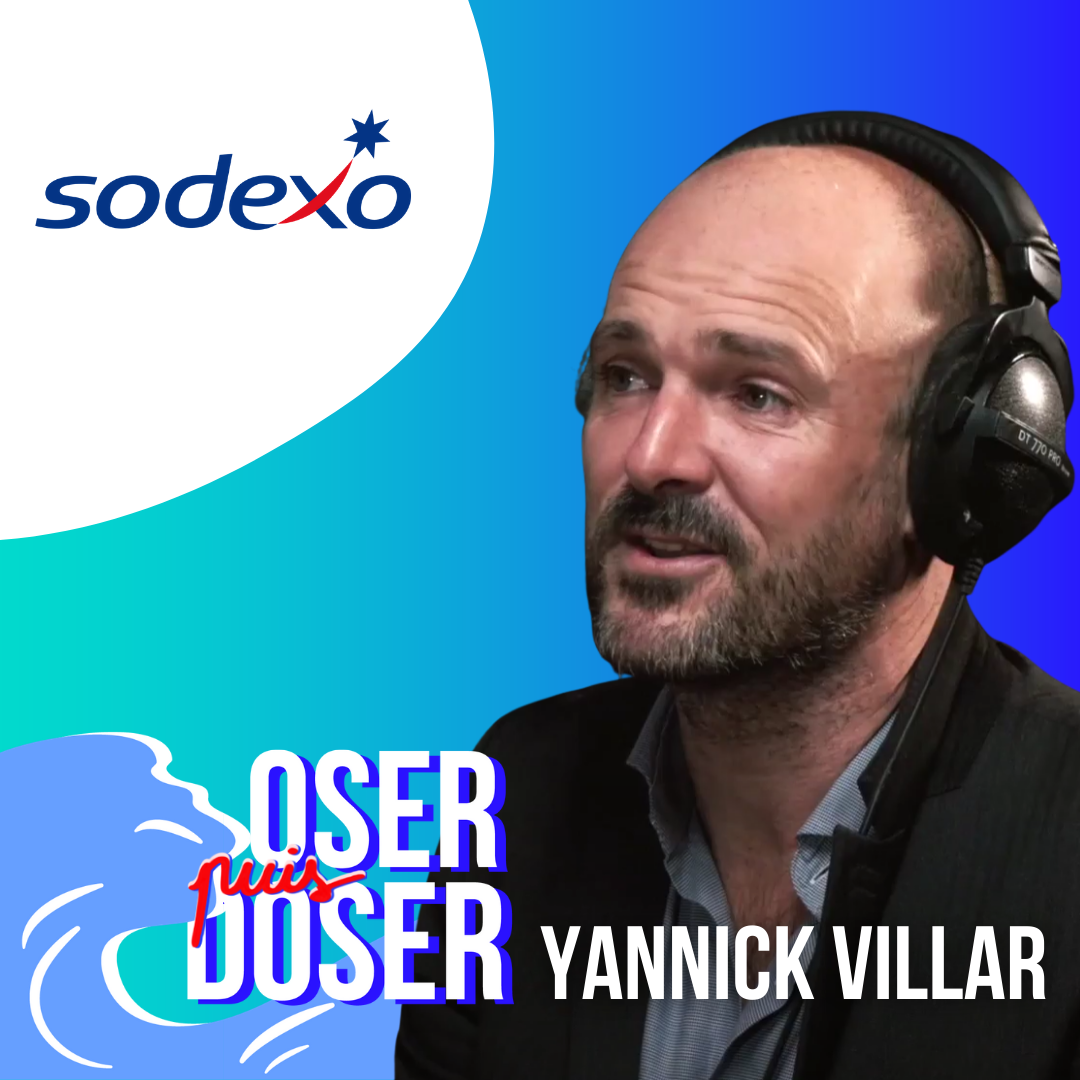
  • Entreprendre dans un grand groupe : le meilleur et le pire des deux mondes – le cas de Sodexo

    Entreprendre dans un grand groupe : le meilleur et le pire des deux mondes – le cas de Sodexo

    Etre entrepreneur au sein d’un grand groupe, c’est à la fois le meilleur mais aussi le pire des deux mondes.

    C’est ce que dit Yannick Villar, intrapreneur chez Sodexo

    Yannick est à la tête de l’initiative Wx : un projet qui a pour but de développer de nouveaux services pour les clients de Sodexo et d’accélérer la transformation des métiers chez Sodexo. Il nous raconte son aventure pleine de rebondissements.

    Dans un premier temps, la stratégie est de monter un joint-venture avec un acteur de l’immobilier pour construire une offre commune : l’immobilier avec le service. C’est comme proposer le hardware (l’immobilier) et le software (Sodexo).

    Mais les ambitions de ces deux acteurs ne sont pas alignées et le projet patine …

    Finalement, le groupe immobilier se retire du projet et Yannick fait prendre a Wx un virage.

    Au fil des conversations, il commence à conseiller certains clients sur la gestion de leur espace de travail. De là, il identifie une opportunité : mesurer l’usage de ces espaces de travail pour pouvoir mieux les gérer.

    Capter, analyser et remonter les données d’usage des espaces de travail, bureau, salle de réunion, etc.. pour optimiser leurs usages. Voilà ce que souhaite proposer Yannick. Comme Sodexo ne sait pas faire cela, Yannick identifie une startup qui sait le faire : Connected Space Management.

    Yannick propose donc à son management l’acquisition de la technologie manquante qui permet de faire ces mesures.

    La proposition est finalement acceptée, ce qui confirme le soutien du management au projet Wx.

    Grâce à cette capacité, Wx se développe mais l’innovation se heurte à des résistances en interne.

    Certains trouvent l’activité de conseil de Wx trop abstraite en comparaison aux services concrets de Sodexo.
    D’autres se demandent pourquoi cette activité n’est pas simplement vendue en supplément des autres services. Pourquoi en faire une entité indépendante ? Pourquoi faire un contrat séparé ?

    Bref, pour faire coexister les intérêts de la petite structure et ceux de Sodexo, Yannick doit se battre.

    Retrouvez l’histoire complète racontée par son principal protagoniste :

    Ou bien sûr :

  • Comment sponsoriser un projet d’innovation, l’exemple de SNCF Réseau

    Comment sponsoriser un projet d’innovation, l’exemple de SNCF Réseau

    Il y a ceux qui ont l’idée de startup et ceux qui soutiennent le projet et se battent pour lui.

    Les sponsors jouent un rôle tout aussi essentiel dans la concrétisation des projets innovants.

    C’est le cas de Jean-Jacques Thomas, directeur digital et innovation à la SNCF Réseau et sponsor du projet Altamétris, une startup qui a pour but de faciliter la surveillance du réseau SNCF grâce à des drones.

    Jean-Jacques nous raconte comment il a créé au sein du groupe les conditions au développement de cette filiale.

    Ce n’était pas gagné d’avance.

    “Tant que je serai là, on n’utilisera pas les drones dans mon métier” dit un expert reconnu de SNCF réseau.

    En tant que sponsor, Jean Jacques a pu aider les porteurs du projet a plusieurs reprises :

    1. Au départ, pour crée un alignement en interne et trouver des cas d’usage concret de la technologie. Cela a contribué à légitimiser le projet et à convaincre face aux résistances et aux réticences de certains.
    2. Dans un second temps, il a convaincu le management d’investir dans le projet et permis à la startup d’obtenir un statut et des moyens pour qu’elle puisse se développer sereinement.
    3. Trois ans après, en 2017, Jean Jacques va porter le projet devant la direction générale et proposer une filialisation. Notamment pour développer des cas d’usages delà de ceux de SNCF Réseau.

    Jean Jacques aura fait partie de ceux qui ont structuré l’aventure d’Altamétris.

    Il nous propose un regard différent sur l’entreprenariat et nous livre les leçons qu’il en a tiré pour rendre l’innovation non plus dépendante d’un contexte ou des personnes mais culturelle et systémique.

    Retrouvez l’histoire complète racontée par son principal protagoniste :

    Ou bien sûr :