What TED said about AI in Vienna
I joined TEDAI in Vienna. It was my first time in the city, once the capital of the Habsburg empire. I was hoping to meet interesting people and leave with new perspectives, and maybe catch a little of the spirit of Vienna 1900.
The conference was in the Hofburg, the imperial palace. 2 days of workshops and talks, and not just about AI but about Technology, Entertainment and Design. TED+AI.
These are my takeaways from the talks and workshops of this edition.
A company built to be fast
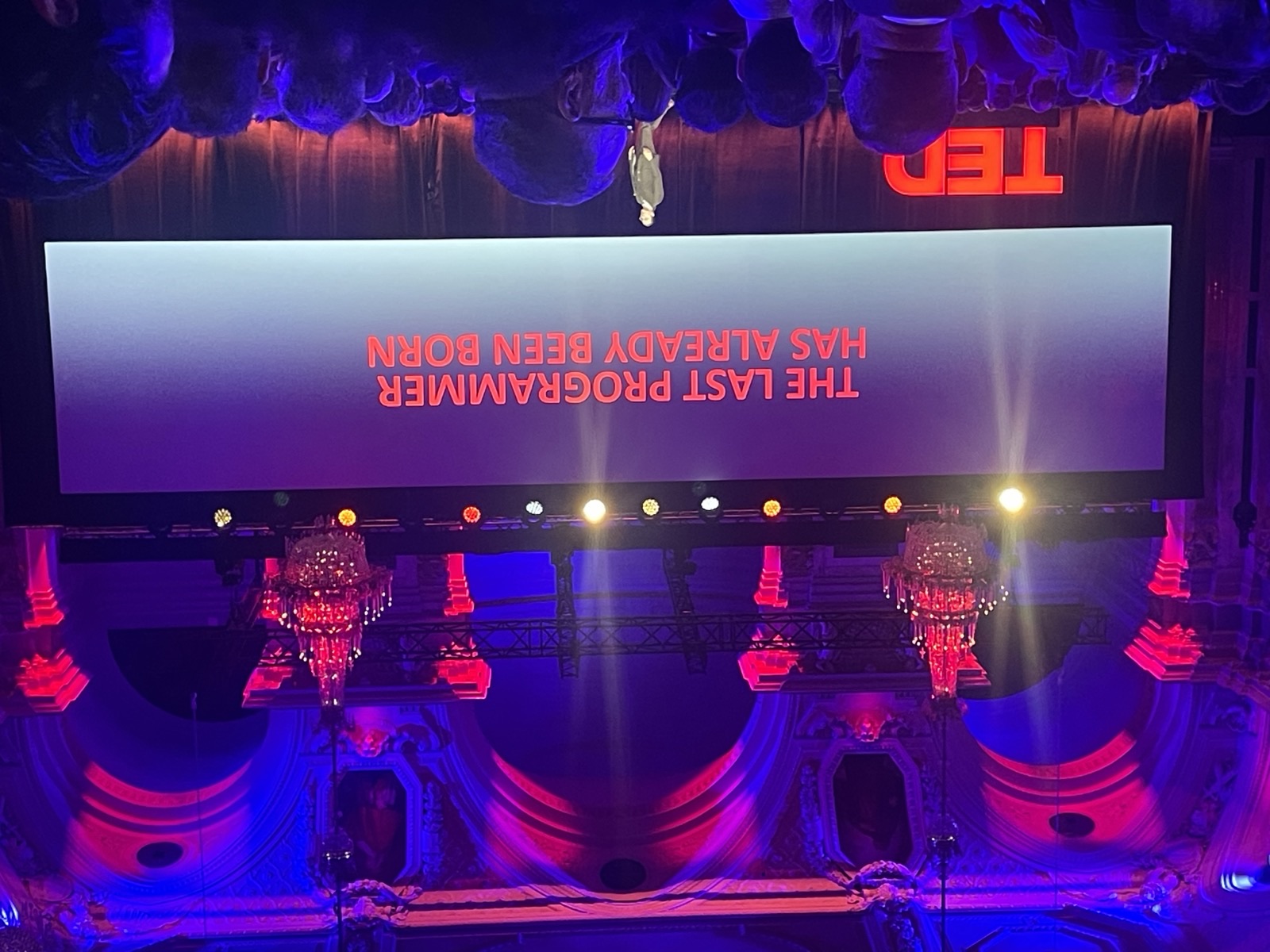
On the first day I listened to the panel on building startups in a world shaped by AI. Daniel Keinrath, CEO and co-founder of fonio.ai, described how his company works, and that part impressed me. Teams of 2 to 3 engineers, each working toward 1 metric on 1 product, talking directly to customers and getting their feedback.
For him AI is inevitable. His goal is to be a fast company, and the whole organization is optimized to deliver as fast as possible.
The supply chain nobody shows
The first talk that stayed with me came from Kauna Ibrahim Malgwi, a Nigerian clinical psychologist and former content moderator who now chairs the African Content Moderators Union. Before a model can refuse to show violence, someone has to label it. That someone swipes through rape and beheading videos, one after another, all day.
Clean AI is built on very dirty work. She showed what that work does to the brain of the people doing it, and how hard the supply chain behind today's models still is.
Learn from what fails
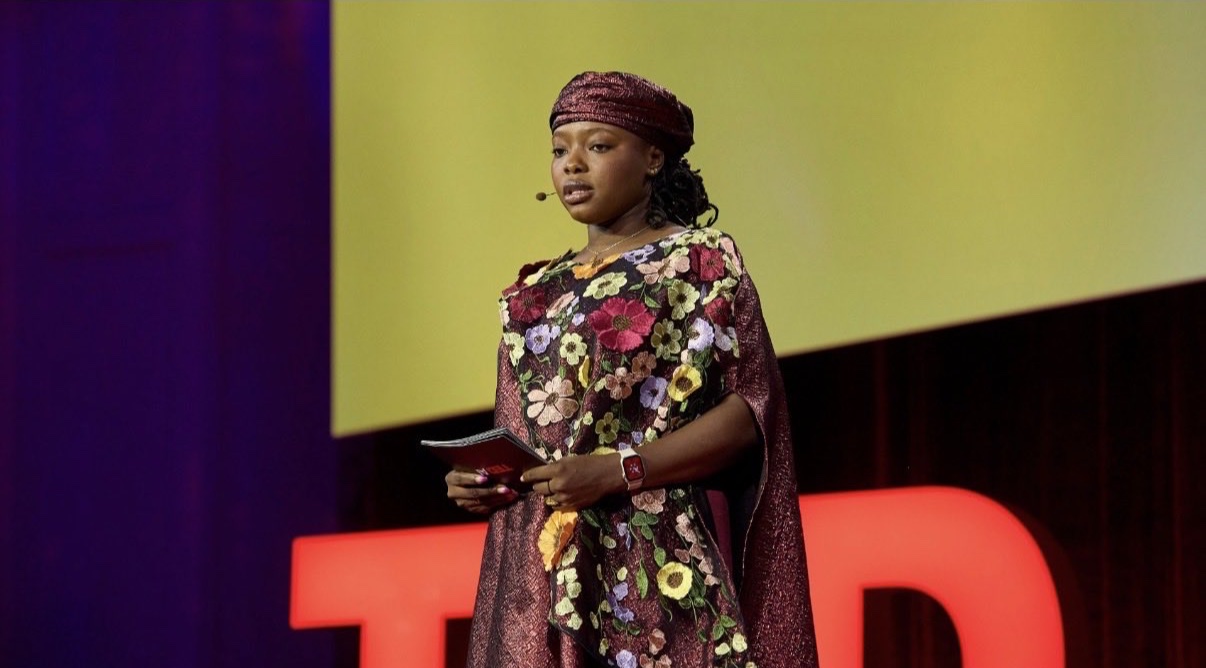
Layla Hosseini-Gerami rescues failed drugs. Her point: there is more to learn from the molecules that fail than from the ones that work. Yet most of that data is thrown away.
Her analogy was aviation. Flying is the safest way to travel because every crash has a black box. Each failure is analyzed, and the whole industry learns from it.
Drug discovery has no black box. A failed molecule gets written off, and its lessons go with it.
I see the same pattern in corporate innovation. Companies bury failed projects, and the black box goes in the ground with them.
If it's smart, it's vulnerable
Mikko Hypponen has spent his career in cybersecurity. His rule fits in one line: if it's smart, it's vulnerable.
Every product we make "intelligent" is one more door to defend, and AI makes finding the weak spots much faster, for attackers and defenders alike. In October, Microsoft patched more than 1,400 flaws in 1 month, a record, and more than it used to fix in a whole year. Much of that surge is credited to AI-assisted discovery.
Who is thinking?
The Italian philosopher Andrea Colamedici brought the concept I keep coming back to: cognitive sovereignty. It's the ability, for a person or a community, to know the conditions under which they think, and to change them.
If AI thinks for you, are you still the one thinking? I use AI every day, so the question is mine too.
When AI isolates
Étienne Brisson's talk put a face on Colamedici's question. His uncle became convinced that ChatGPT was sentient and capable of love, and that he had created the first conscious AI. He cut himself off from his family and stopped eating, until he ended up in hospital for 21 days.
The family brought him back by finding others on Reddit: families with someone caught in the same loop. From there Étienne started The Human Line Project, to help people harmed by AI. It was the most moving talk of the conference for me.
The pull toward average
Carissa Véliz gave the last talk. Agents are good at producing, she said, but what they make drifts toward the average, and the average is rarely delightful.
She weighed efficiency against elegance, and argued we need both. Then she closed with the sentence I took home:
If AI taught me one thing, it is to value everything that is not AI.
Moments almost without AI
The program seemed to agree with her. The moments I remember best had almost nothing artificial in them.
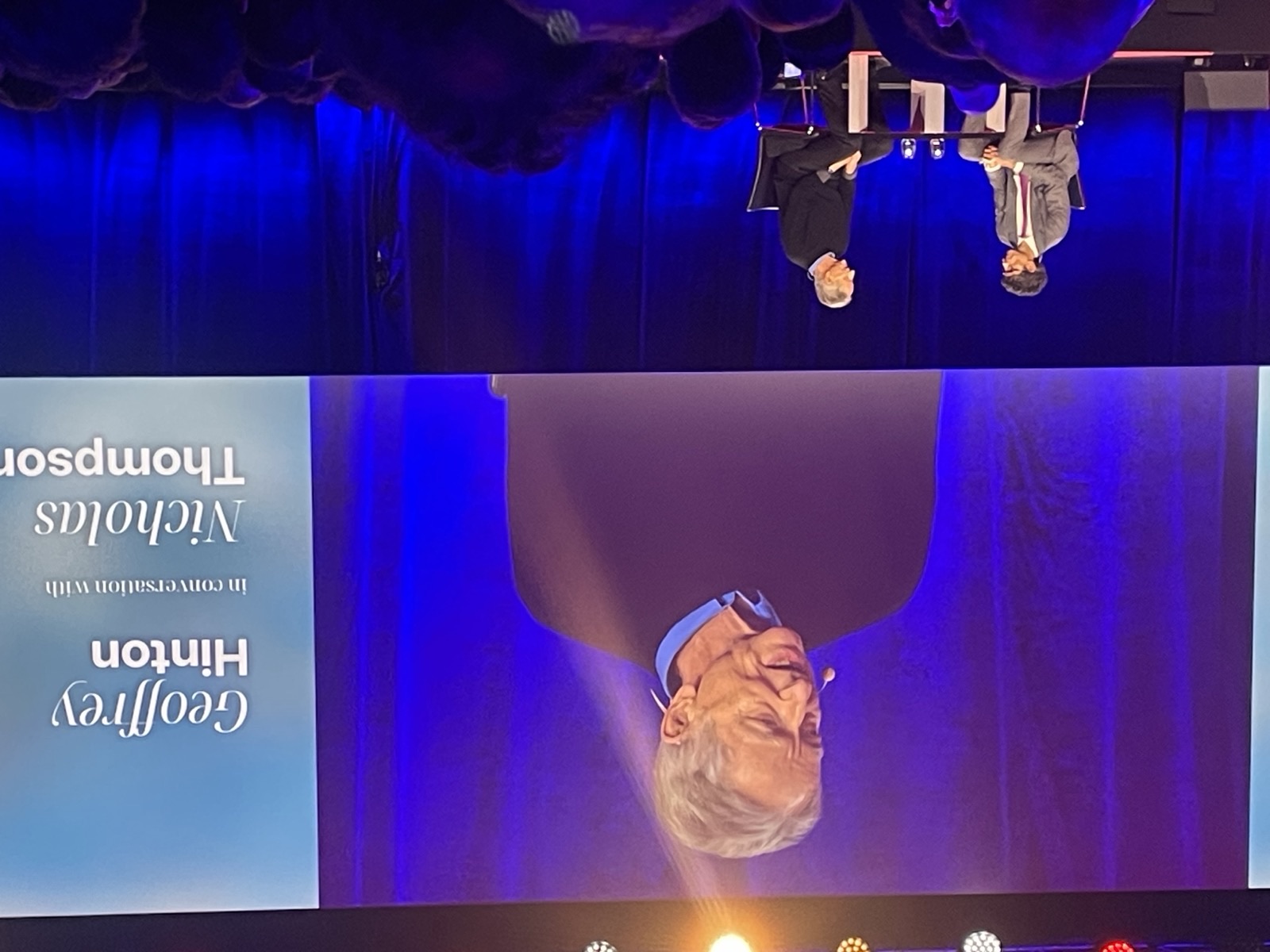
- Chris Turner freestyled a rap on words thrown at him by the audience, in a rap battle with the robot. I got to talk to both of them afterwards, without rapping or battling anything.
- The Sound of Leadership, with Florian and Dorothea Schönwiese, a private concert on listening: to the other person, to the music, and to what it wakes up in you.
- M.O.M, a beatbox trio, kept the room breathing between the heavy talks.
The last picture
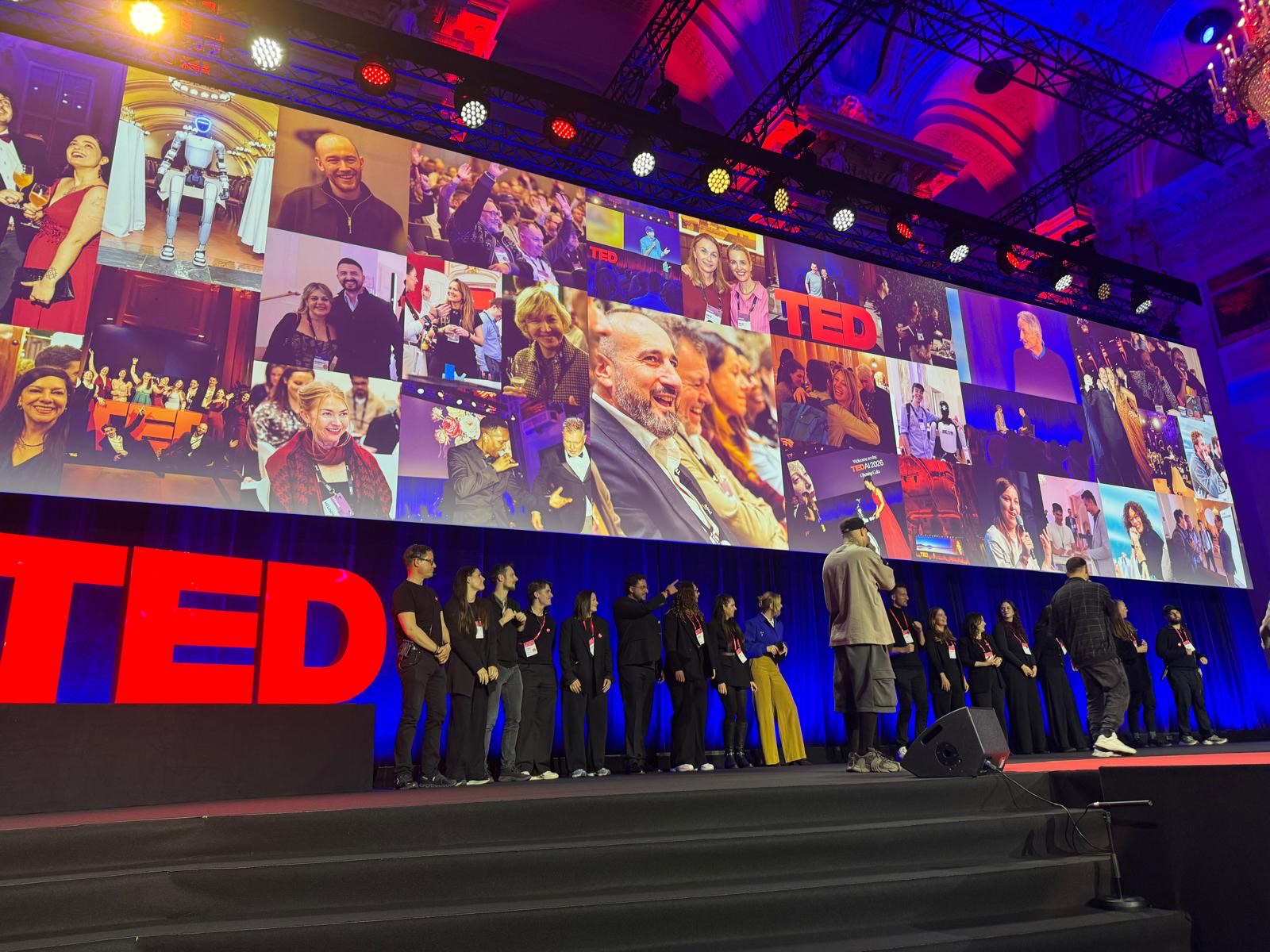
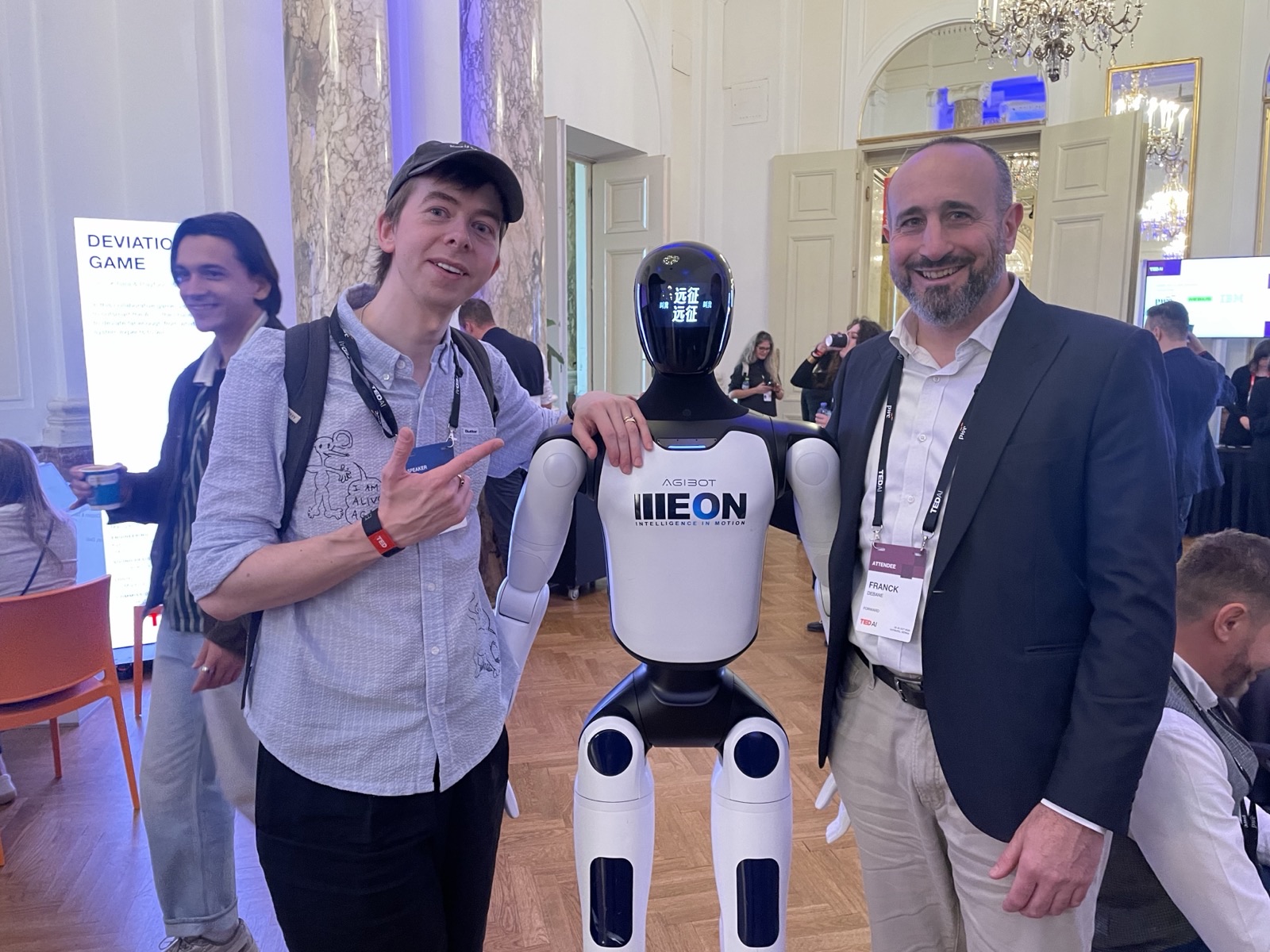
I don't know how, but without being a speaker, my photo ended up right in the middle of the event's big patchwork. A great way to welcome newcomers to the community!
At the wrap-up cocktail, I also got to talk with Peter Steinberger, the father of OpenClaw. We talked about his life after AI. What I proposed stays private for now.