UX and design thinking
18 notes, 2010 to 2026 · All guides
Both UX and design thinking start from the people who use the product, and not from the product itself.
The UX section begins with Donald Norman’s The Design of Everyday Things, which put the user at the centre of design in 1988, then ten usability findings from Smashing Magazine. Small details come next: 16 pixels for body copy, labels above fields, links that never say “click here”, and how one extra field cost Expedia $12 million. A BBC visit to Google’s user research lab in London, Wells Riley on how design works and a piece on empathy in a UX project close the section.
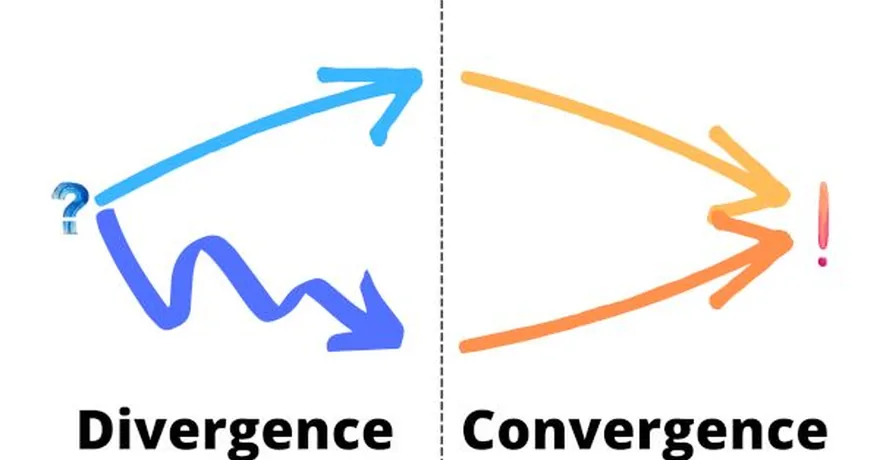
Design thinking opens with the core skills Tim Brown lists, and the difference between divergent and convergent thinking, which a team cannot do at the same time. A more human zebra crossing shows starting from observed behaviour, and a checklist is the secret of Apple’s design process.
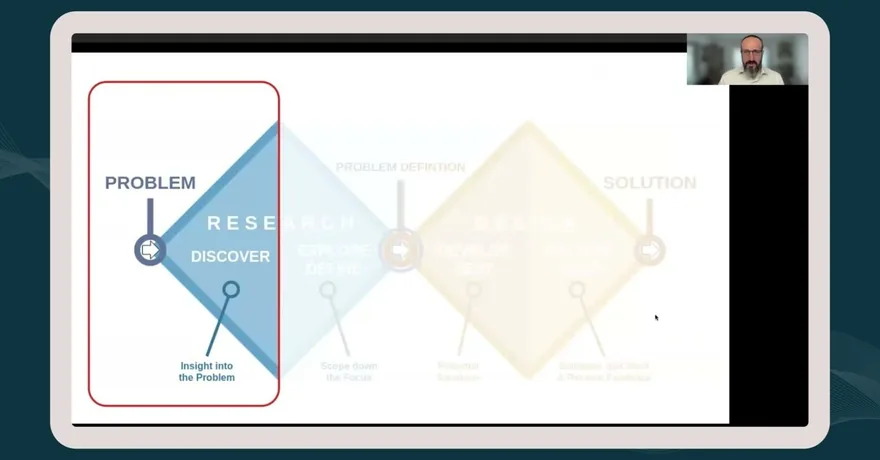
Then the design sprint: a talk from Google I/O 2014 and the do-it-yourself guide from Google Ventures, a five-day process from problem to tested prototype. The taxonomy of innovation sorts 36 tools into looking, understanding and making, seven lessons from game design follow, and a clip shows how AI can help with the first stage of design thinking.
UX
-
It is about the users
I recommend reading ‘The design of everyday things’ by Donald Norman. The book convey a very rich idea. The idea is about putting the user …
-
10 useful usability findings and guidelines
Dmitry Fadeyev (Smashing Magazine, 2009) sums up ten research findings: form labels work best above fields, users focus on faces, design quality signals …
-
16 pixels for body copy
Smashing Magazine (2011): readership means revenue, and most web users find the « normal » small font sizes hard to read. Letting users zoom is not …
-
Why users fill out forms faster with top-aligned labels
UX Movement: labels placed above the fields make forms faster and easier to fill in than labels on the left or right, because the eye moves in one …
-
Why your links should never say « click here »
UX Movement: « click » draws attention to the mouse rather than to the interface, and « here » hides what the user is about to open. Better to link nouns …
-
Expedia: how one extra data field cost $12 million
Expedia's analysts wondered why many customers who clicked « Buy Now » never completed the purchase. The cause was an optional « Company » field under the …
-
Business and the web user experience (BBC)
BBC News (2011) visits Google's user research lab in London, where test subjects are observed while they browse, to explain user experience design: with …
-
This is how design works, by Wells Riley
Wells Riley's guide for startups: design is not a logo or a theme but a method of problem solving. It covers what good design is, with Dieter Rams' ten …
-
Empathy for a better UX
Florine Lelay, on the Backelite blog, shows empathy at work on three levels of a UX project: with users, by putting yourself in their place and testing …

Design thinking
-
Core Skills for Design Thinking – according to Tim Brown
We are all designers. Everyday we produce. Professionally and personally. A response to customer. A birthday party for your kid. A meeting. A vacation. All …
-
Divergent vs convergent thinking
Neuroscience measured creativity. Turns out it's not one thing. It's 2 different dopamine circuits that can't run at the same time. (based on Chermahini & …
-
Design thinking: a more human zebra crossing
The Ergo Crosswalk, designed by Jae Min Lim: pedestrians instinctively cut corners at crossings, so this zebra crossing is curved to follow the paths …
-
The secret of Apple’s design process: a checklist
Quartz, drawing on Leander Kahney's book on Jony Ive: the keystone of Apple's creativity and speed is, unexpectedly, a checklist, the Apple New Product …
-
The design sprint, from Google Ventures to Google[x]
Talk at Google I/O 2014 (46 minutes) by Daniel Burka, Jake Knapp and Nadya Direkova: the design sprint, a five-day process to prototype and test any …
-
Google Ventures’ do-it-yourself guide to the design sprint
VentureBeat (January 2015): Google Ventures publishes a guide for startups to run their own design sprint, the five-day process formalised by Jake Knapp …
-
The taxonomy of innovation (Harvard Business Review)
The Luma Institute's taxonomy of innovation, published by Harvard Business Review in January 2014: 36 of the most effective tools for innovators …
-
Lessons from game design, by Christina Wodtke
Christina Wodtke's talk « Mechanics of Magic: Seven Lessons from Game Design » (66 minutes): gamification, with badges and progress bars stuck on …
-
A quick introduction to using AI with Design Thinking
In this clip from a Global Innovation Institute (GInI) webinar, Franck shows how AI can help with the first stage of design thinking: understanding the …