MVP and experiments
18 notes, 2010 to 2022 · All guides
A minimum viable product is an experiment. It shows how customers would behave if your idea existed, before you spend the money to build it.
Start with the map of MVPs by stage: validate the problem, then the value proposition, then the solution, then product/market fit. Steve Blank explains why an MVP is about learning, not about a cheaper product. A proverb makes the same point: only a fool tests the depth of the water with both feet. Testing Business Ideas, by David Bland and Alexander Osterwalder, turns all this into a method.
Then real MVPs: a service run by hand behind an automated front, a paper prototype tested in a coffee shop, a landing page, a blog, a book written like software. The first iPhone was one too.
Last, running the tests: making experiments a habit, selling bottled water in the street for a day, A/B tests at startup scale and at SpaceX scale, and two and a half days at Lean Startup Machine in London.
Start here
-
What MVP should I build?
You know as an entrepreneur that before building your idea you should build an MVP first, the famous Minimum Viable Product. So what is this MVP? …
-
An MVP is not a cheaper product, it’s about smart learning (Steve Blank)
Steve Blank: a minimum viable product is not always a smaller, cheaper version of the final product. With a startup planning to fly drones with …
-
Seul un sot mesure la profondeur de l’eau avec ses deux pieds
Seul un sot mesure la profondeur de l'eau avec ses deux pieds, dit le proverbe. Et pourtant en entreprise cela arrive trop souvent: de gros …
-
Testing Business Ideas, de David Bland et Alexander Osterwalder
Je vous recommande le livre de David Bland et Alexander Osterwalder : Testing Business Ideas. Il formalise et structure l'expérimentation et les MVP avec …
Kinds of MVP
-
Wizard of Oz MVP
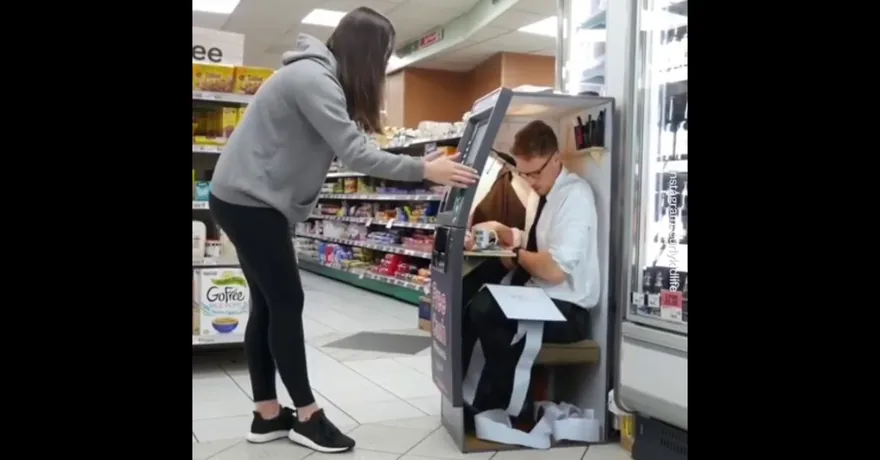
A 23-second video on the Forward Partners channel shows the principle: the service is delivered by hand while customers believe they are using the …
-
Paper prototyping: how TenTune tested an app with pencil and paper
Tristan Kromer tells how the founders of TenTune, a music discovery app, tested their idea in a coffee shop with hand-drawn screens and an MP3 player …
-
How to set up a landing page to validate a product idea
Scott McLeod explains how to test demand with a simple landing page before building anything: clear copy and a single call to action, a value proposition …
-
Five successful startups that started as blogs
Fast Company: a blog post can be the quickest MVP. Several startups validated their idea by writing first, such as Danielle Morrill, whose essays ranking …
-
Writer as coder: the iterative way to write a book
Leo Babauta (Zen Habits) wrote his book Zen Habits: Mastering the Art of Change the way software is built: a « minimum viable book » written chapter by …
-
Apple’s original iPhone was a minimum viable product
Elia Freedman answers Redfin's CEO Glenn Kelman, who blamed the lean startup for killing big ideas: the first iPhone was itself a minimum viable product …
-
Beyond the MVP: the minimum loveable product, by Laurence McCahill
Laurence McCahill (Spook Studio) proposes the minimum loveable product: rather than the version that brings the most learning for the least effort, aim …
-
Five steps to building a minimum viable product with story mapping
The author starts from a figure: around 60% of the features teams build are waste. Story mapping lays out the user's journey as a map of features, from …
Running experiments
-
It’s time to fail! (Strategyzer)
Strategyzer: let ideas face their ultimate judge, the customer, as soon as they take shape. Two traps keep companies from testing early: the vision trap …
-
How to make experimentation a repeatable process in your business
Mike Fishbein, in The Next Web (2015): the old product cycle of long development, market research and costly launches is giving way, from garage startups …
-
How much water can you sell? (37signals)
Jason Fried (37signals): at Techstars Chicago, each startup had one day to sell bottled water on the street, choosing its own stock and price. The …
-
The pros and cons of A/B testing for startups
ReadWriteStart (2010): A/B testing tells startups a lot about their users' habits, beyond visual design. But relying too heavily on it to reach perfection …
-
SpaceX A/B tests its Starship builds
Ars Technica reported in May 2019 that SpaceX was building two Starship prototypes in parallel, in Texas and in Florida, as a competition between two …
-
Lean Startup Machine experience
I recently attended the Lean Startup Machine workshop in London. WOW. What an experience. 2.5 days of immersion to develop an idea into a viable …