Customer psychology
13 notes, 2010 to 2025 · All guides
Customers do not decide the way a spreadsheet says they should. They follow defaults, fear losses and keep what confirms what they already believe.
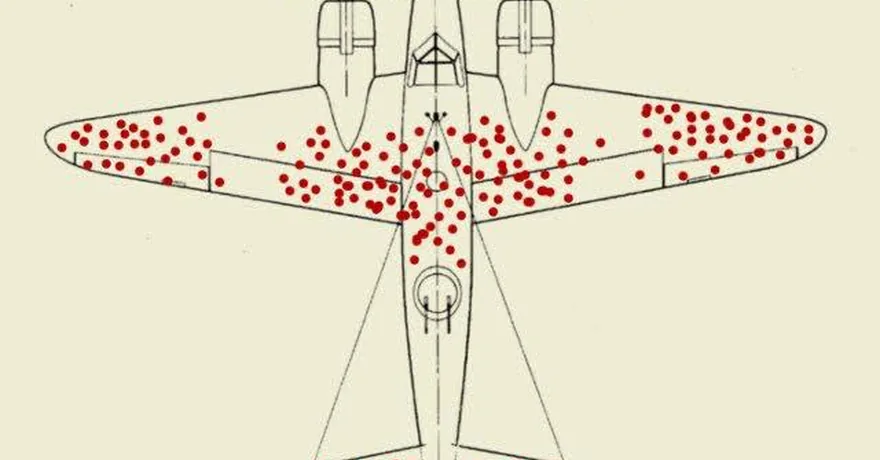
Start with the mistakes our minds make. Behavioral economics names loss aversion, the power of default and confirmation bias. Survivorship bias is the story of the planes that came back, and the same error shows up when a founder looks only at the customers who stayed. Eight subconscious mistakes and twenty lessons from social psychology widen the list.
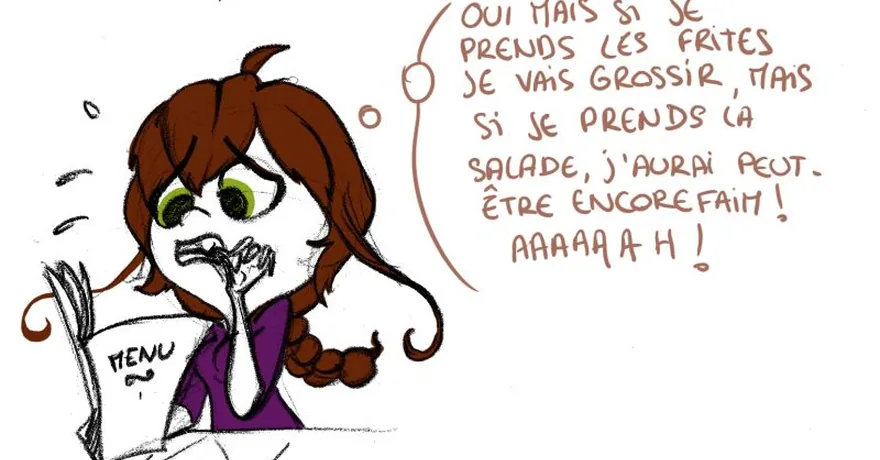
Then how this plays out when people choose. Ten bizarre details that influence customers online, and eighteen cognitive biases to use in conversion optimization, or to avoid being caught by. Some people struggle to decide at all. Susan Weinschenk shows how psychology informs UX, and a short note in French says to make a choice, even a bad one.
Last, emotions, habits and AI. Facebook’s experiment on emotional contagion ran on nearly 700,000 users. Nir Eyal and Andrew Chen explain habit-forming products, and a note on a Microsoft and Carnegie Mellon study suggests that the more we trust AI, the less we think for ourselves.
Start here
-
Behavioral economics and the mistakes we do
In his gamification lecture on coursera.org Prof. Kevin Werbach talks about behavioral economics. At the intersection of ecomomics and behaviorism, behavioral economics differs from economics …
-
Survivorship bias: the planes that came back
“My product is better than their product, so I’ll succeed.” “If I focus on my unhappy customers, I’ll be able to retain them and decrease my churn rate.” …
-
8 subconscious mistakes our brains make every day
An article from the Buffer blog, republished by Fast Company, lists eight thinking errors we make without noticing: surrounding ourselves with information …
-
The 20 best lessons from social psychology
Zach Hamed shares twenty findings from a social psychology class, each with its study: reciprocity, the endowment effect, the contagion of smiles, the …
How people choose
-
10 bizarre things that influence customers online
Linda Bustos (Elastic Path) lists psychological details with a measurable effect on online buying, such as the colour, size and shape of buttons, capital …
-
18 cognitive biases you can use for conversion optimization
CXL describes 18 cognitive biases that shape how people decide online, from anchoring and the bandwagon effect to confirmation bias, with for each one a …
-
Why so many people can’t make decisions
The Wall Street Journal (2010): some people see the world in black and white, others in shades of grey. Researchers call the second group's conflicting …
-
Frites ou salade ? Faites un choix
Faites un mauvais choix. Mais faites un choix. Faire un choix c'est la peur de prendre une mauvaise décision, peur de se tromper, peur de faire un mauvais …
-
The psychologist’s view of UX design
Susan Weinschenk, psychologist and cognitive scientist, explains in UX Magazine how her science informs design: like the blind men describing an elephant …
Emotions, habits and AI
-
Facebook’s experiment on emotional contagion
In June 2014, researchers from Facebook and Cornell published in PNAS an experiment run on nearly 700,000 users, whose news feeds were altered to show …
-
Habits are the new viral (Nir Eyal)
Nir Eyal, in TechCrunch (February 2012): the value of web businesses increasingly depends on the habits of their users. Early media companies sold …
-
Designing social products with 3 habit-forming feedback loops (Andrew Chen)
Andrew Chen describes the three feedback loops behind successful social products: one that rewards those who post content, one that rewards passive …
-
The more we trust AI, the less we think for ourselves
The study is by Microsoft Research and Carnegie Mellon University, presented at CHI 2025. 319 knowledge workers described 936 real uses of generative AI …