Innovation
148 notes, 2010 to 2026 · page 11 of 15
-
Beyond the MVP: the minimum loveable product, by Laurence McCahill
Laurence McCahill (Spook Studio) proposes the minimum loveable product: rather than the version that brings the most learning for the least effort, aim …
-
How to use surveys to learn from your customers
Too often I have seen entrepreneur trying to understand their customer need by sending them … a survey. “Please rank those feature in order of …
-
Lessons from game design, by Christina Wodtke
Christina Wodtke's talk « Mechanics of Magic: Seven Lessons from Game Design » (66 minutes): gamification, with badges and progress bars stuck on …
-
The Waterfall Startup
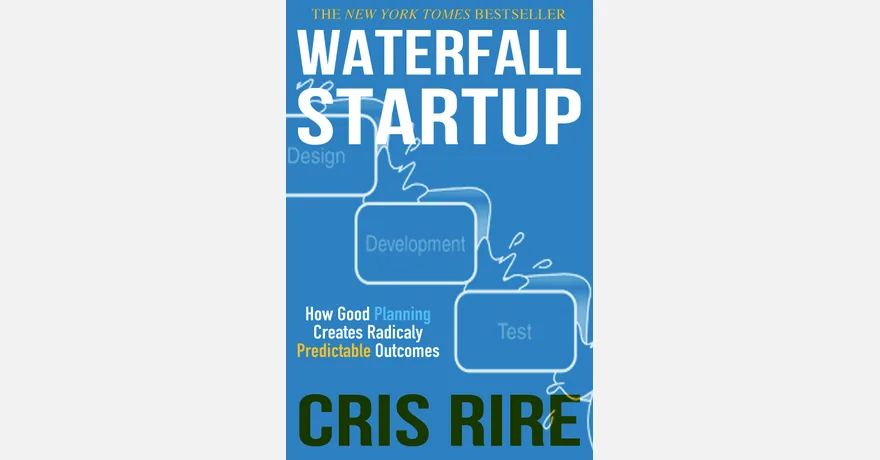
How wise entrepreneurs embrace the predictable outcome of their vision to build innovations. A new groundbreaking methodology to create predictable outcome in chaotic situations. Pre-order …
-
Problem Interview Guide for Lean Startup Experience
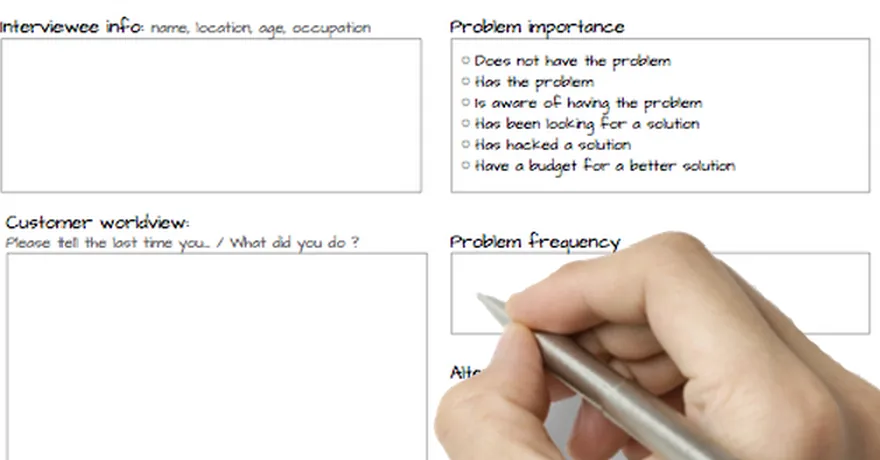
The one-page guide we handed out at Lean Startup Experience for problem interviews: how to prepare, how to open, what to learn, which questions to ask, and how to close. With the three rules to remember.
-
Problem interview template
Nov-14 2014: Added entry to classify customer into early adopter or not using @Justin_Wilcox definition: someone who is actively trying to solve the problem Talking …
-
Put this Hammer Down – Why do Customer Discovery ?
“When you have a hammer everything looks like a nail” -Bernard Baruch Here, the hammer is your solution and the nails are your customers. I …
-
The design sprint, from Google Ventures to Google[x]
Talk at Google I/O 2014 (46 minutes) by Daniel Burka, Jake Knapp and Nadya Direkova: the design sprint, a five-day process to prototype and test any …
-
Nordstrom links design thinking, lean startup and agile
The Nordstrom Innovation Lab tells its journey as a team timeline: an agile team that iterated « to nowhere » on ideas nobody wanted, then added lean …
-
Design thinking: a more human zebra crossing
The Ergo Crosswalk, designed by Jae Min Lim: pedestrians instinctively cut corners at crossings, so this zebra crossing is curved to follow the paths …